Key takeaways
- Step 1: Part Inspection & Consultation. Every project starts with a thorough inspection of the parts to be coated.
- Step 2: Disassembly & Masking. Non-metal components that can’t withstand the 400°F curing temperature must be removed.
- Step 3: Chemical Degreasing. All oil, grease, and surface contaminants are removed with an appropriate chemical degreaser.
- Step 4: Abrasive Blast Cleaning. Media blasting removes all existing coatings, rust, scale, and surface impurities while creating a surface profile that dramatically improves powder adhesion.
- Step 5: Pre-Treatment / Phosphating. For steel parts, we apply an iron phosphate pre-treatment that:
Understanding the powder coating process helps you appreciate why it produces such superior results compared to conventional paint. At Gorilla Powder Coating, we follow a rigorous multi-step process to ensure every piece we coat meets our high standards.
Step 1: Part Inspection & Consultation
Every project starts with a thorough inspection of the parts to be coated. We assess:
- Material type (steel, aluminum, cast iron, etc.)
- Current surface condition (rust, existing coatings, damage)
- Geometry and masking requirements
- Customer’s color and finish preferences
Step 2: Disassembly & Masking
Non-metal components that can’t withstand the 400°F curing temperature must be removed. We carefully mask any areas that should not receive powder coating, including:
- Threaded holes and precision fits
- Bearing surfaces
- Areas requiring metal-to-metal contact
Step 3: Chemical Degreasing
All oil, grease, and surface contaminants are removed with an appropriate chemical degreaser. This step is critical — powder won’t adhere properly to contaminated surfaces, and any oil that gets into the abrasive blasting media contaminates future jobs.
Step 4: Abrasive Blast Cleaning
Media blasting removes all existing coatings, rust, scale, and surface impurities while creating a surface profile that dramatically improves powder adhesion. We select the appropriate blast media (steel shot, aluminum oxide, glass bead, etc.) based on the material and desired finish.
This step creates a surface profile measured in “anchor tooth” — micro-peaks and valleys in the metal surface that the powder mechanically locks into during curing.
Step 5: Pre-Treatment / Phosphating
For steel parts, we apply an iron phosphate pre-treatment that:
- Creates a crystalline conversion coating on the metal surface
- Dramatically improves powder adhesion
- Provides a first layer of corrosion protection
- Prevents rust from forming under the powder coating
Step 6: Electrostatic Powder Application
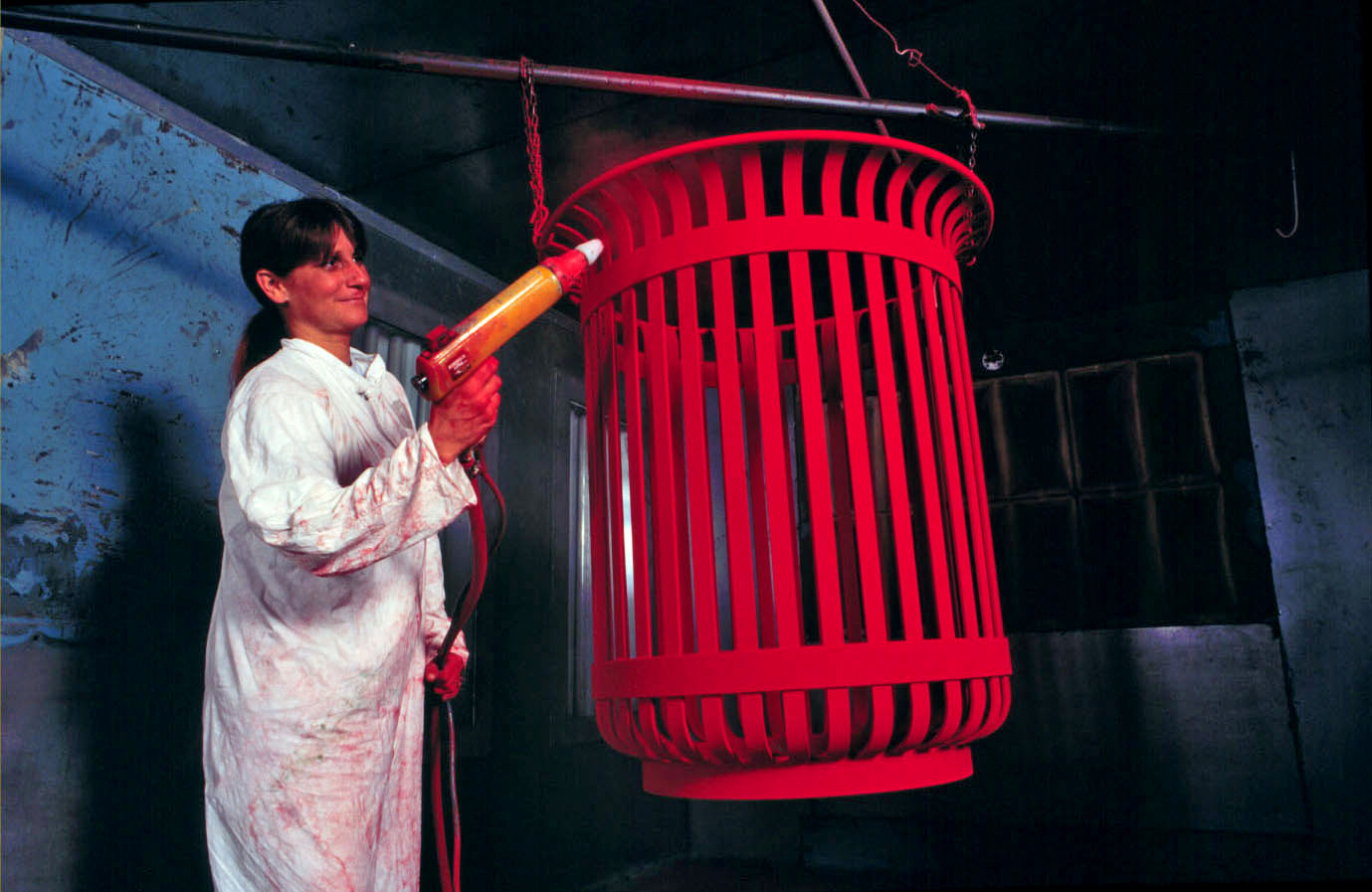
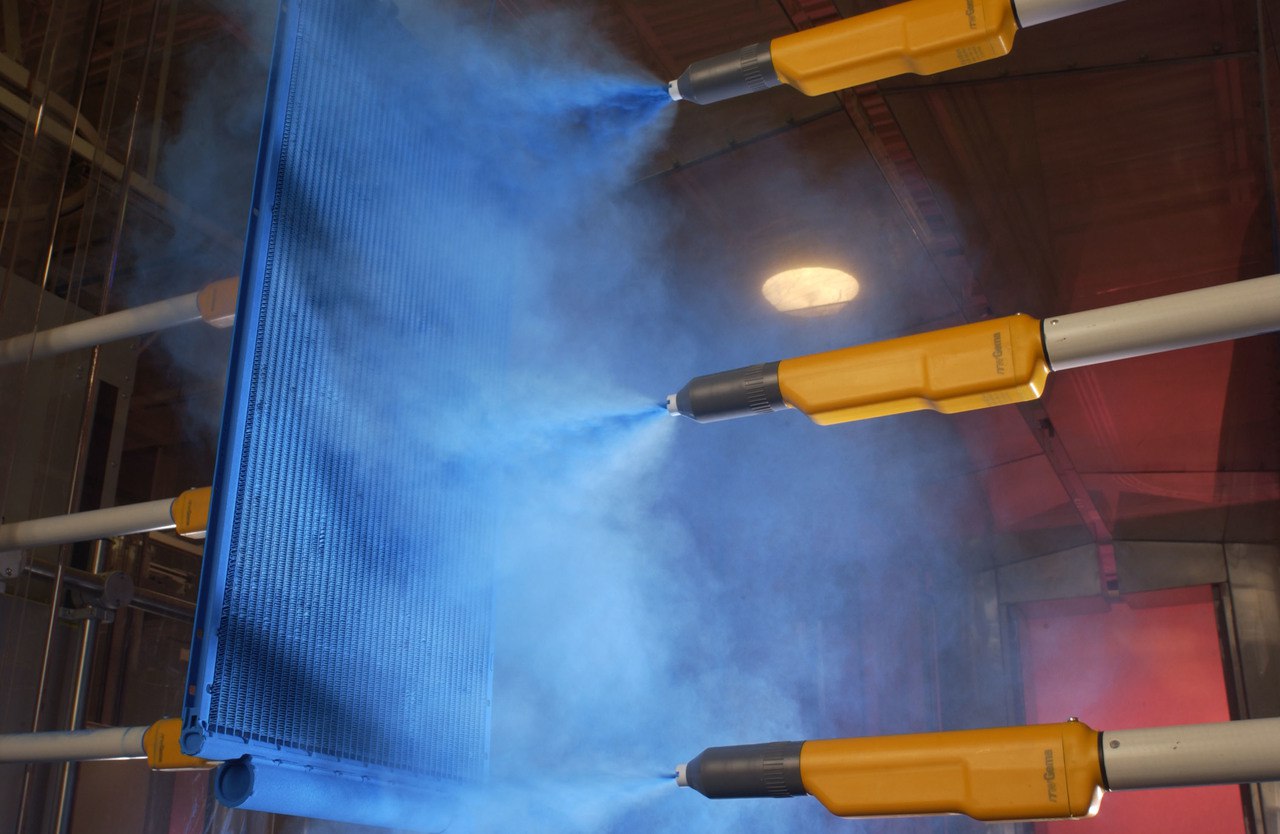
The powder coating is applied using specialized electrostatic spray guns. The gun imparts an electric charge to the powder particles as they exit the nozzle. Since the part is grounded, the opposite charges cause the powder particles to be attracted to the metal surface and “stick” electrostatically until cured.
This electrostatic process provides:
- Uniform coverage including edges and recessed areas
- High powder transfer efficiency (90%+)
- Consistent film thickness
Step 7: Oven Curing
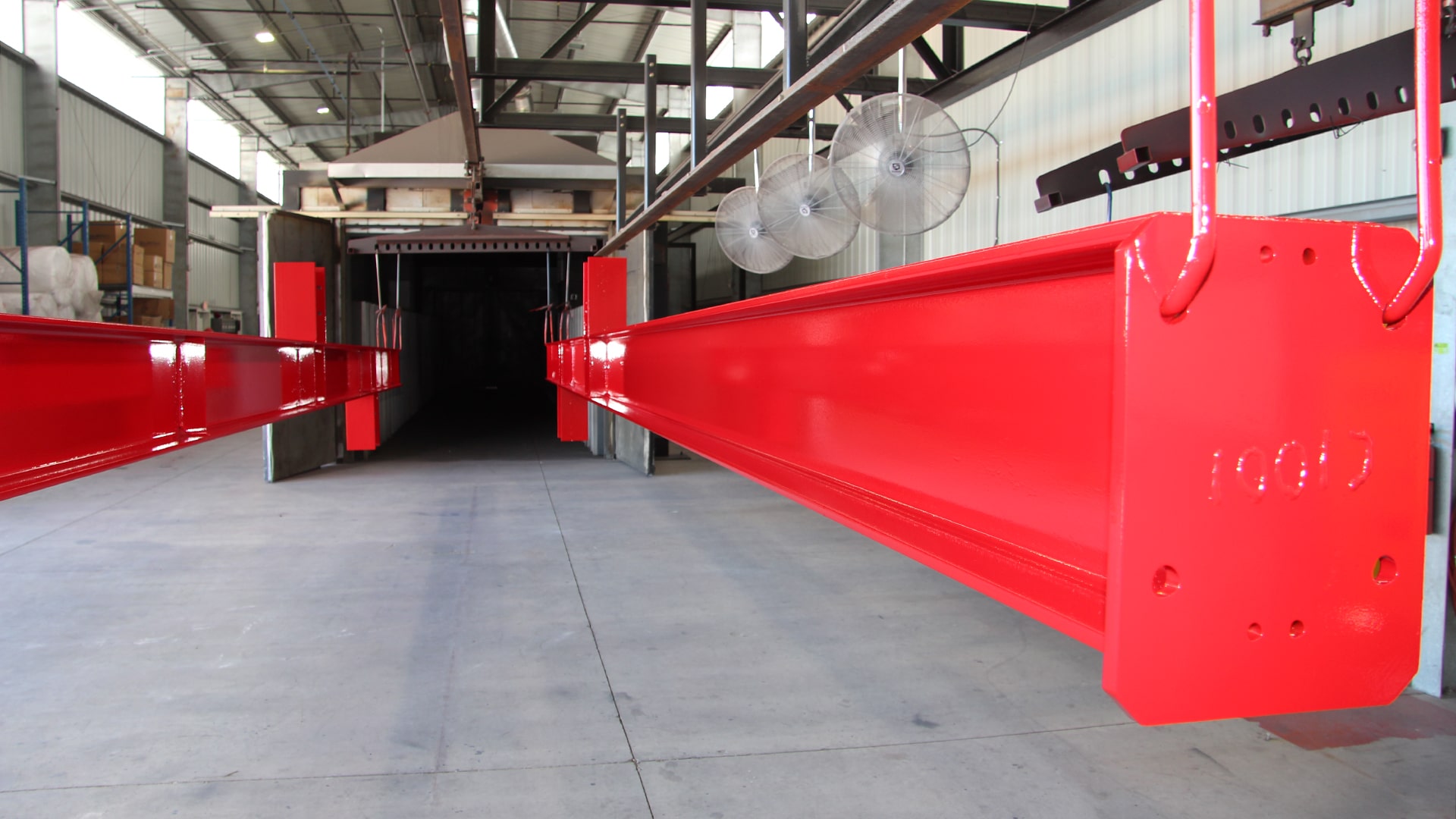
The powder-coated parts are loaded into our industrial curing oven and baked at 350-400°F (depending on the powder chemistry) for 15-20 minutes. During curing:
- The powder particles melt and flow together into a continuous film
- Cross-linking reactions occur between the polymer chains
- The coating cures into a hard, chemically-resistant finish
Step 8: Cooling & Quality Inspection
After curing, parts are allowed to cool to room temperature before handling. Our quality control process checks for:
- Complete, even coverage with no bare spots
- Correct film thickness
- Surface appearance (no contamination, runs, or texture defects)
- Color accuracy compared to the specified standard
How Long Does the Powder Coating Process Take?
For standard jobs, the complete powder coating process takes 1-3 days depending on part complexity and current workload. Rush service is available. We provide estimated completion times when you drop off your parts.
Ready to experience the professional powder coating process? Get a free quote from Gorilla Powder Coating today!
Teresa Wallace
Written by the team at Gorilla Powder Coating — 13+ years of automotive, industrial and custom finishing work. Questions about your own project? Get in touch.
Ready to get it coated?
Send us the part, the color and the timeline. You will get honest pricing and a realistic turnaround before anything goes in the booth.