Key takeaways
- Powder Coating vs Wet Paint: How the Process Actually Differs. Powder coating starts as a dry powder, a mix of resin and pigment, applied electrostatically so it clings to a grounded metal part.
- Where Powder Coating Wins. Powder coating earns its reputation on parts that take real abuse.
- Where Wet Paint Wins. Wet paint’s biggest advantage is flexibility, in more ways than one.
- Making the Actual Decision. What are you coating, and can it survive an oven?
- Cost Considerations. Powder coating often costs more upfront per part than a basic wet paint job, largely because of the equipment and oven curing process involved, but the calculation shifts once you factor in…
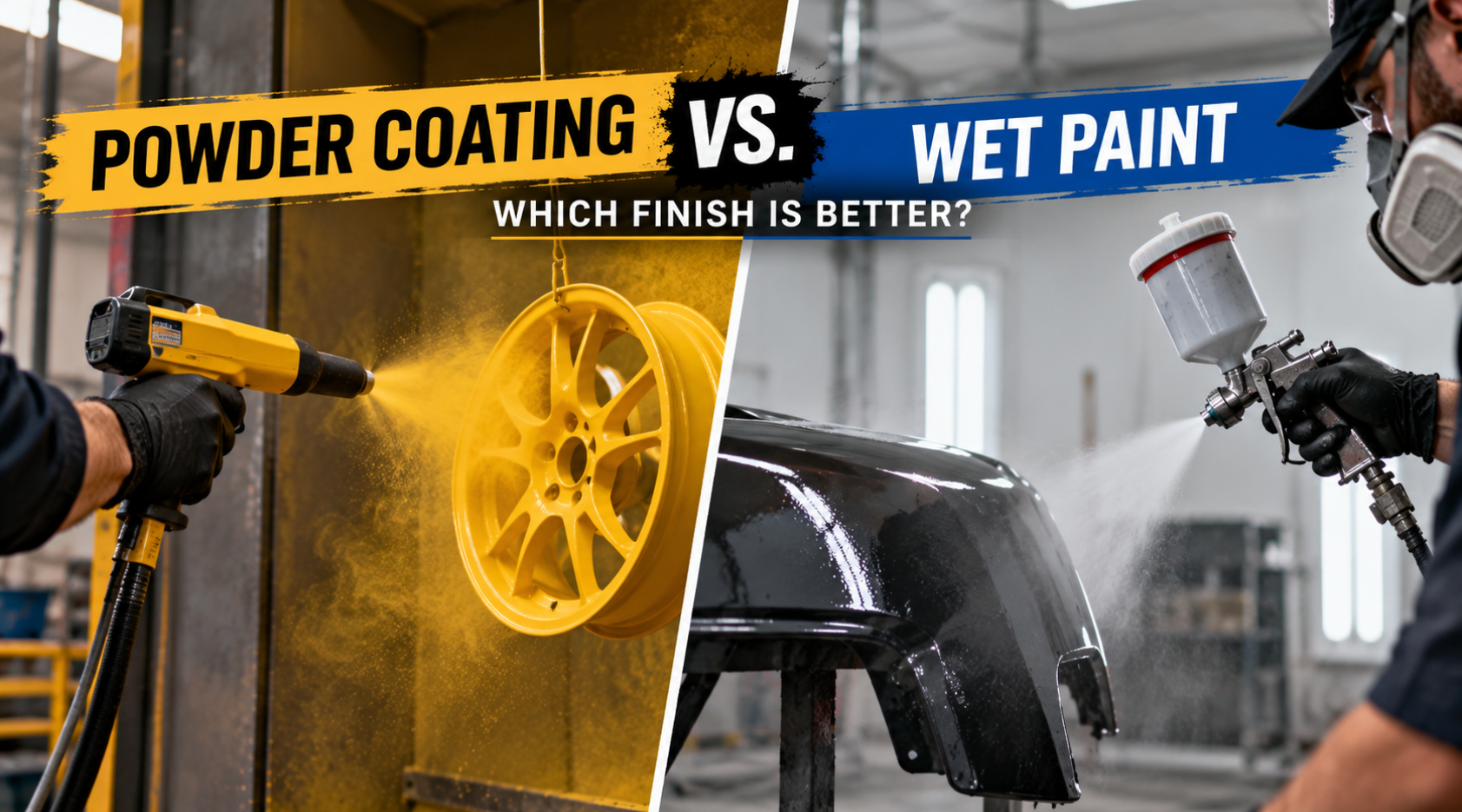
Anyone shopping around for a finish on wheels, furniture, tools, or a restoration project runs into the same question eventually: powder coating vs wet paint, which one actually makes sense here. Both can leave a piece looking sharp, and both have loyal fans who’ll tell you theirs is the obvious choice. The truth is more useful than either camp lets on. These are genuinely different processes with different strengths, and the right pick depends less on which one is “better” in the abstract and more on what you’re actually coating, how it’ll be used, and what you need out of the finish five years down the road.
Powder Coating vs Wet Paint: How the Process Actually Differs
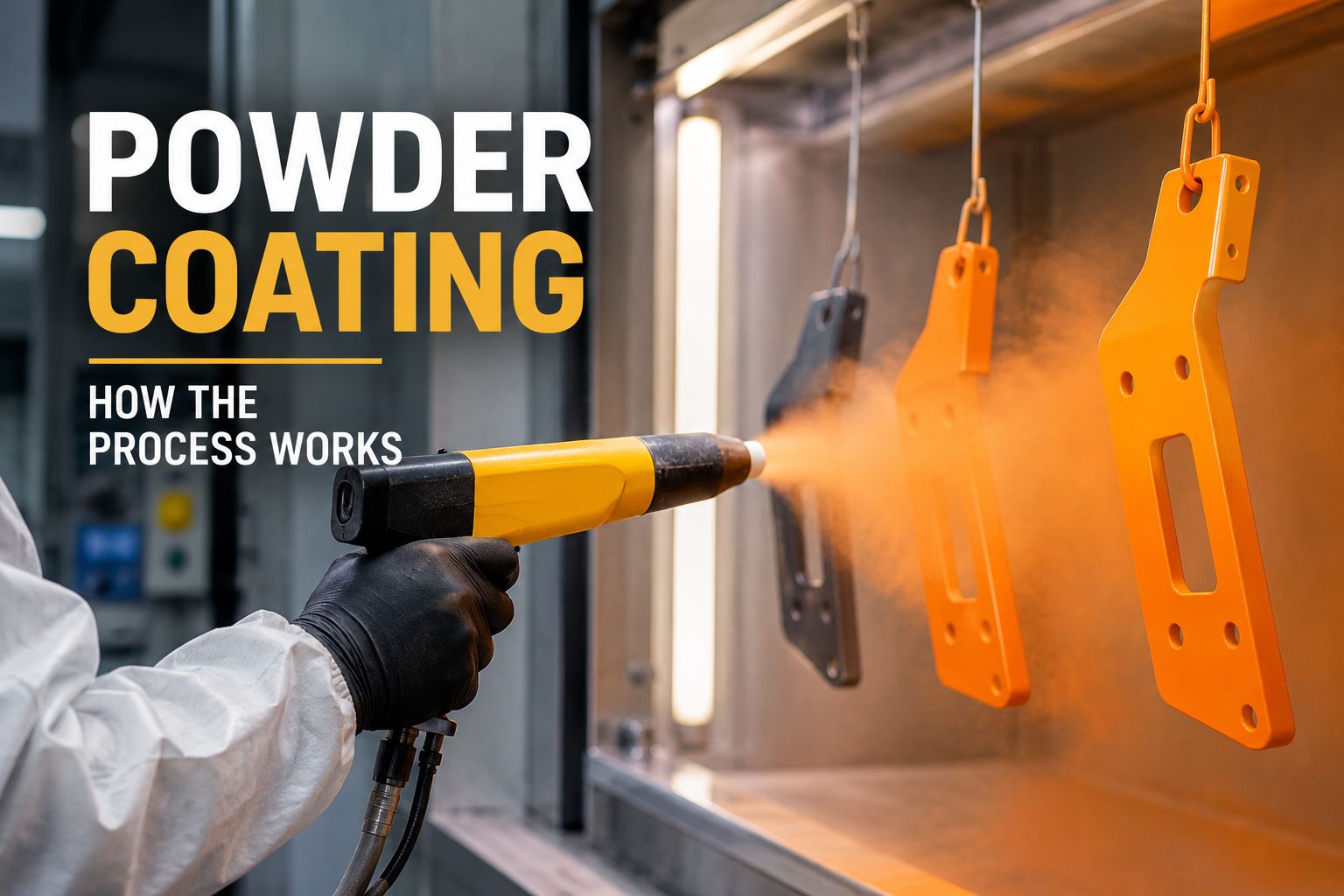
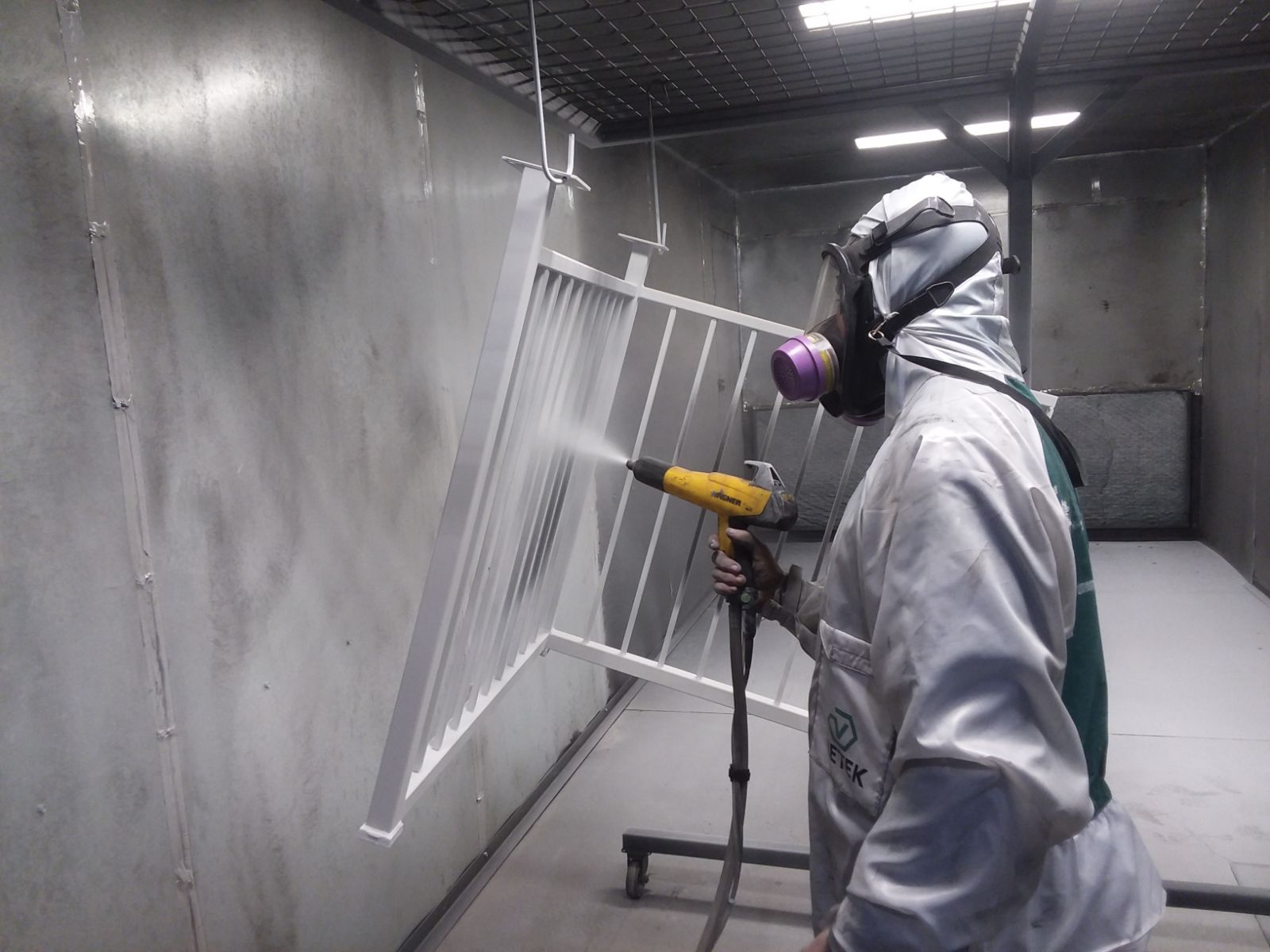
Powder coating starts as a dry powder, a mix of resin and pigment, applied electrostatically so it clings to a grounded metal part. Once the powder is on, the piece goes into an oven, where heat melts the powder and fuses it into a continuous, hard film. That baking step is what gives powder coating its signature toughness, and it’s also the process’s biggest constraint: whatever you’re coating has to survive oven temperatures and has to physically fit inside one.
Wet paint works the way most people already picture painting working. Liquid paint, whether solvent-based or water-based, gets sprayed, rolled, or brushed onto a surface and dries through evaporation or a chemical curing reaction, sometimes helped along with a heat lamp or a low-temperature bake, but nothing close to a powder coating oven’s heat. That lower-temperature process is exactly why wet paint stays the default for wood, plastic, and large assemblies that can’t be baked.
Comparing the Two Finishes
| Factor | Powder Coating | Wet Paint |
|---|---|---|
| Chip and scratch resistance | Excellent | Good, varies by paint quality and clearcoat |
| UV and fade resistance | Strong, especially with UV-stable formulations | Good, depends heavily on the specific paint and topcoat |
| Corrosion resistance | Strong when properly applied over prepped metal | Good, depends on primer and film build |
| Coating thickness and evenness | Thick, very consistent film | Thinner, more prone to runs or thin spots if rushed |
| Color and effect options | Wide range, but custom color matching is more limited | Nearly unlimited, easy custom blending and effects |
| VOC and environmental impact | Low, no solvents, overspray often reclaimable | Higher for solvent-based paints, lower for water-based |
| Substrate limitations | Metal only, must tolerate oven heat and fit inside one | Works on metal, wood, plastic, and more |
| Touch-up and repair | Harder, often needs full recoat for a clean match | Easier, straightforward to blend a touch-up |
| Typical turnaround | Fast cure once in the oven | Slower, especially with multiple coats and dry time |
Where Powder Coating Wins
Powder coating earns its reputation on parts that take real abuse. Wheels, brake calipers, patio and outdoor furniture, tools, brackets, and anything else that’s going to see regular scrapes, road debris, or weather exposure benefits from the thick, chip-resistant film powder coating produces. Because the finish cures as a fused solid layer rather than an evaporated liquid film, it tends to hold up to impact and abrasion noticeably better than a comparable coat of wet paint without a heavy-duty clearcoat on top.
It’s also the more consistent option in terms of film thickness. A skilled painter can lay down a beautiful wet coat, but powder coating’s electrostatic application naturally produces an even film across a part’s surface, including into corners and recesses that are easy to underspray with a paint gun.
Where Wet Paint Wins
Wet paint’s biggest advantage is flexibility, in more ways than one. It works on materials powder coating simply can’t touch: wood, most plastics, fiberglass, and any assembly too large or too heat-sensitive to go into an oven. If you’re finishing a wooden cabinet, a plastic panel, or a full vehicle body rather than individual metal parts, wet paint is often the only real option on the table.
Color and finish flexibility is the other big one. Custom color matching, fades, metallics, and specialty effects are far easier to achieve with wet paint, which is part of why high-end automotive paint jobs and restoration work still lean on it even when powder coating is available for the metal components involved. Touch-ups are simpler too. A scratch in wet paint can usually be blended with a small amount of matching paint. A scratch in powder coating is tougher to repair invisibly, since getting a new patch of cured powder coating to blend seamlessly with the surrounding finish is a real challenge even for an experienced shop.
Making the Actual Decision
What are you coating, and can it survive an oven? This is the first real filter. Metal parts that can handle curing temperatures and fit inside an oven are candidates for powder coating. Anything made of wood, most plastics, or anything too large to fit an oven chamber needs wet paint or an alternative finishing process.
How much abuse will the finish actually take? Wheels, tools, and outdoor furniture exposed to constant handling, weather, and impact lean toward powder coating’s durability advantage. A decorative piece that mostly needs to look good and won’t see much physical wear has less to gain from powder coating’s toughness.
Do you need a specific custom color or effect? If you’re chasing an exact color match, a candy or pearl effect, or any kind of custom blend, wet paint gives you far more room to work with. Powder coating comes in a wide standard range, but custom formulation is more limited and often more expensive.
How will repairs get handled down the road? If a piece is likely to take scratches or chips that’ll need touch-up over its life, wet paint’s easier repairability is worth factoring in. If the piece is more likely to get fully recoated rather than spot-repaired when it eventually needs attention, powder coating’s repair limitation matters less.
What’s the environmental and health consideration for your shop or project? Powder coating produces essentially no VOCs and overspray can often be collected and reused, which matters for anyone doing regular finishing work in an enclosed space. Water-based wet paints have closed a lot of that gap in recent years, but solvent-based paints still carry more of an environmental and ventilation consideration than powder coating does.
For a broader look at how powder coating stacks up against other coating technologies beyond just wet paint, our piece on comparing coating solutions covers how it compares to spray-applied polyurea and a few other options, which is useful context if you’re weighing more than just these two finishes.
Cost Considerations
Powder coating often costs more upfront per part than a basic wet paint job, largely because of the equipment and oven curing process involved, but the calculation shifts once you factor in durability. A powder-coated part that doesn’t need to be refinished for years can end up cheaper over its lifespan than a wet-painted part that needs touch-ups or a full repaint sooner due to chipping or fading. Wet paint keeps the cost advantage on large or irregularly shaped items, where oven size and part handling would make powder coating impractical or prohibitively expensive regardless of the durability benefit.
Surface Preparation Matters Either Way
Whichever finish you choose, the same rule applies: the prep work underneath the finish determines how well it actually performs. Metal being powder coated needs to be properly cleaned and often media blasted or chemically treated to remove rust, oil, and old coatings before the powder goes on, since powder coating will not hide or bond well over a poorly prepared surface. Wet paint depends just as heavily on proper sanding, priming, and surface cleaning. A beautiful topcoat over inadequate prep fails the same way regardless of which finishing method you chose, usually through adhesion loss or premature peeling.
DIY vs. Professional Application
Wet paint is the more accessible option for a hobbyist working at home. A basic spray gun setup, adequate ventilation, and some practice can get a reasonable result on smaller projects without specialized equipment. Powder coating is a harder DIY proposition, mainly because of the oven requirement. While small home powder coating setups do exist using a converted oven or a dedicated toaster-style unit for small parts, most serious powder coating work still goes through a professional shop with proper spray booths, ovens sized for real parts, and the electrostatic equipment needed for even coverage.
That equipment gap is worth factoring into the decision alongside the finish’s technical merits. A one-off project on a small part might make sense to attempt at home with either method. A full set of wheels, a large assembly, or anything where an uneven or poorly cured finish would be a real disappointment is usually better handled by a shop with the right equipment and experience, regardless of which finish you’ve decided on.
Maintenance for Each Finish
Powder coated surfaces generally need little more than routine cleaning with mild soap and water to stay looking good, since the cured film resists most everyday grime and doesn’t require waxing the way some paint finishes do. Wet paint, particularly on exterior applications, often benefits from periodic waxing or sealant to maintain gloss and UV protection, along with prompt attention to any chips before moisture or corrosion can get underneath the film at the damaged spot.
Frequently Asked Questions
Conclusion
Powder coating and wet paint aren’t really competing for the same job most of the time, once you look past the marketing pitch each side tends to make. Powder coating wins on raw durability for metal parts that can handle an oven and take real abuse. Wet paint wins on flexibility, covering substrates and custom finishes powder coating can’t touch, and it stays easier to repair down the road. The right choice comes down to what you’re actually finishing, how it’ll be used, and what actually matters to you: toughness that lasts, or the freedom to get exactly the color and effect you’re after.
Teresa Wallace
Written by the team at Gorilla Powder Coating — 13+ years of automotive, industrial and custom finishing work. Questions about your own project? Get in touch.
Ready to get it coated?
Send us the part, the color and the timeline. You will get honest pricing and a realistic turnaround before anything goes in the booth.