Key takeaways
- Understanding the Basics. Powder coating is a dry finishing process.
- The Science of Electrostatic Application. The application stage is where the process’s most distinctive feature comes into play: electrostatic charge.
- Why Surface Preparation Determines Everything Downstream. Before any powder is applied, the part’s surface has to be properly prepared, and this stage disproportionately determines whether the finished coating will actually hold up.
- The Curing Process and Cross-Linking. Once the powder is applied, the coated part moves into a curing oven, typically reaching temperatures in the range of 350 to 400 degrees Fahrenheit, though the exact temperature and dwell ti…
- What Film Thickness Actually Controls. Film thickness, generally measured in microns or mils, is a variable that gets set during application and then locked in during cure.
Powder coating looks almost deceptively simple from the outside: a part goes in one end of a shop, comes out the other end with a hard, even, colorful finish. What actually happens in between, an electrostatic charge doing most of the heavy lifting, followed by a chemical transformation inside an oven, is a more interesting process than the finished result lets on.
This guide explains what’s actually happening at each stage of powder coating, the mechanics behind why it works the way it does, rather than just listing the steps in order. Understanding the “why” behind each stage makes it a lot easier to judge whether a shop is doing the job correctly, and why some finished parts hold up for decades while others fail within a year, sometimes despite looking identical the day they left the shop.
Understanding the Basics
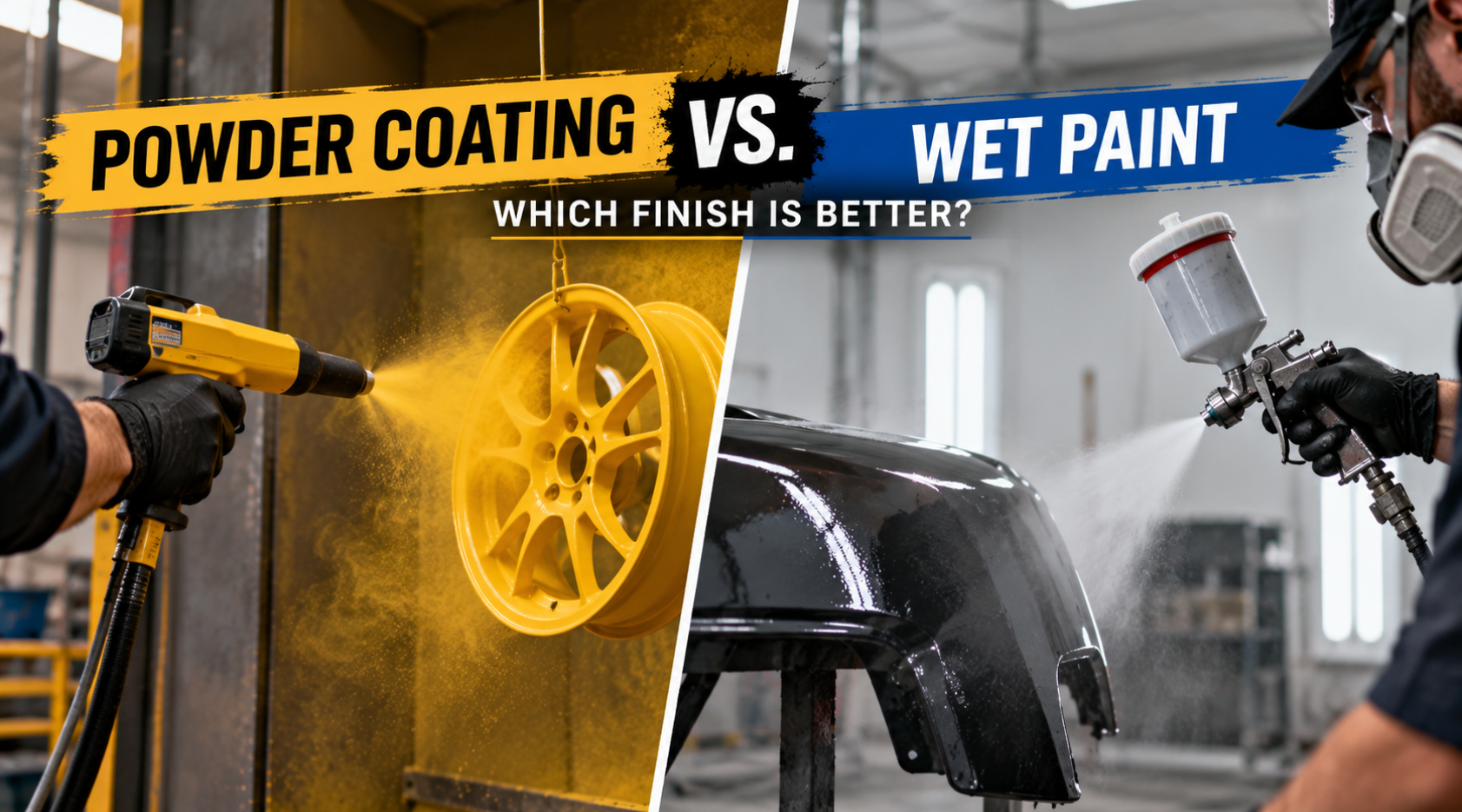
Powder coating is a dry finishing process. Unlike liquid paint, which relies on a solvent to keep pigment and resin in a sprayable liquid state until it evaporates and leaves the finish behind, powder coating uses a dry, finely ground mixture of resin and pigment applied directly as a powder. There’s no solvent to evaporate, which is part of why powder coating produces essentially no volatile organic compound emissions during application, a meaningful difference from traditional liquid paint both environmentally and in terms of workplace air quality.
The finish that ends up on the part isn’t created by drying, the way paint dries. It’s created by melting and chemically cross-linking the powder under heat, which is a fundamentally different mechanism than how liquid coatings cure, and it’s why powder coating produces a noticeably tougher, more chemically resistant finish than comparable liquid paint systems in most side-by-side comparisons.
The Science of Electrostatic Application
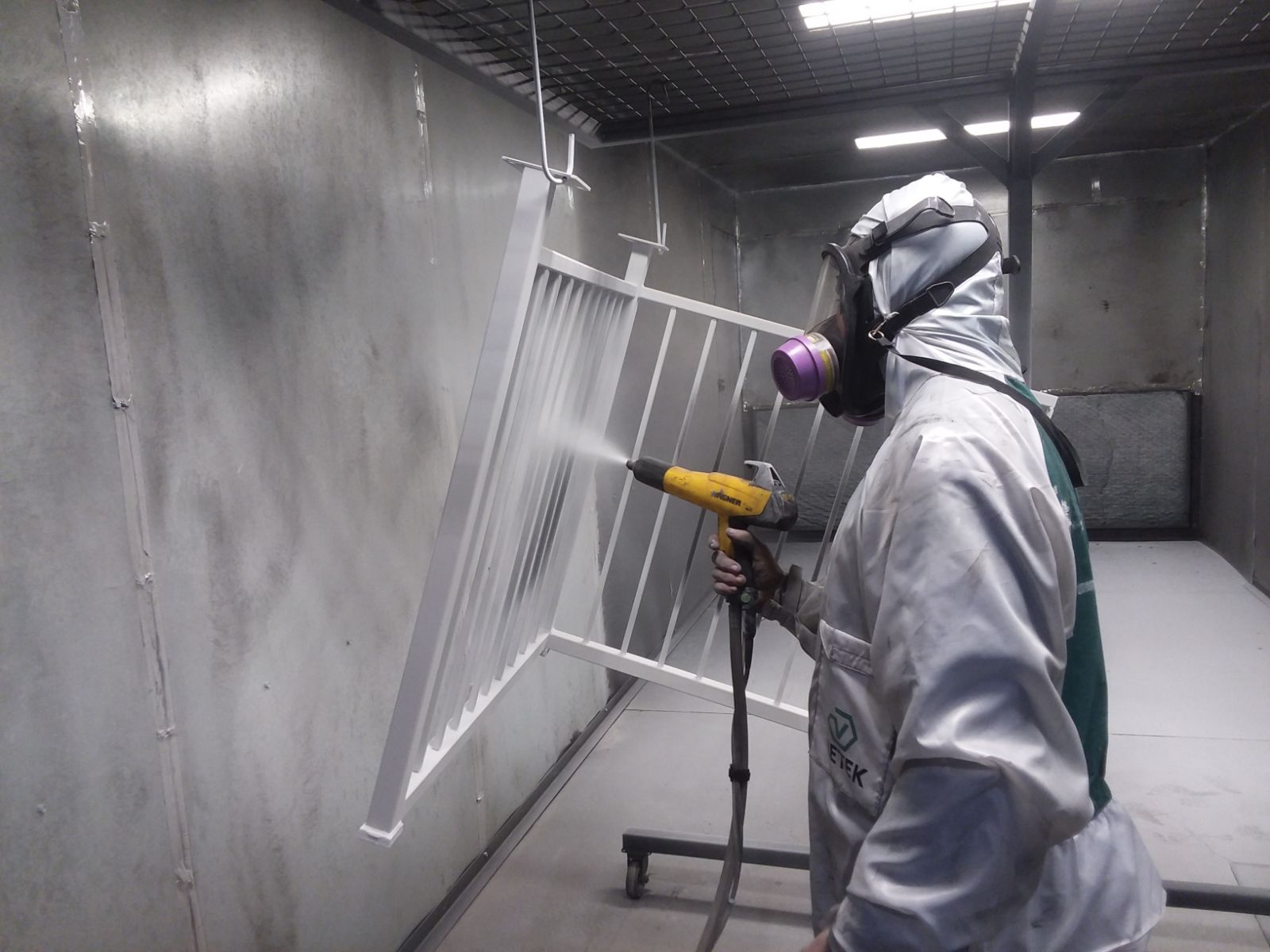
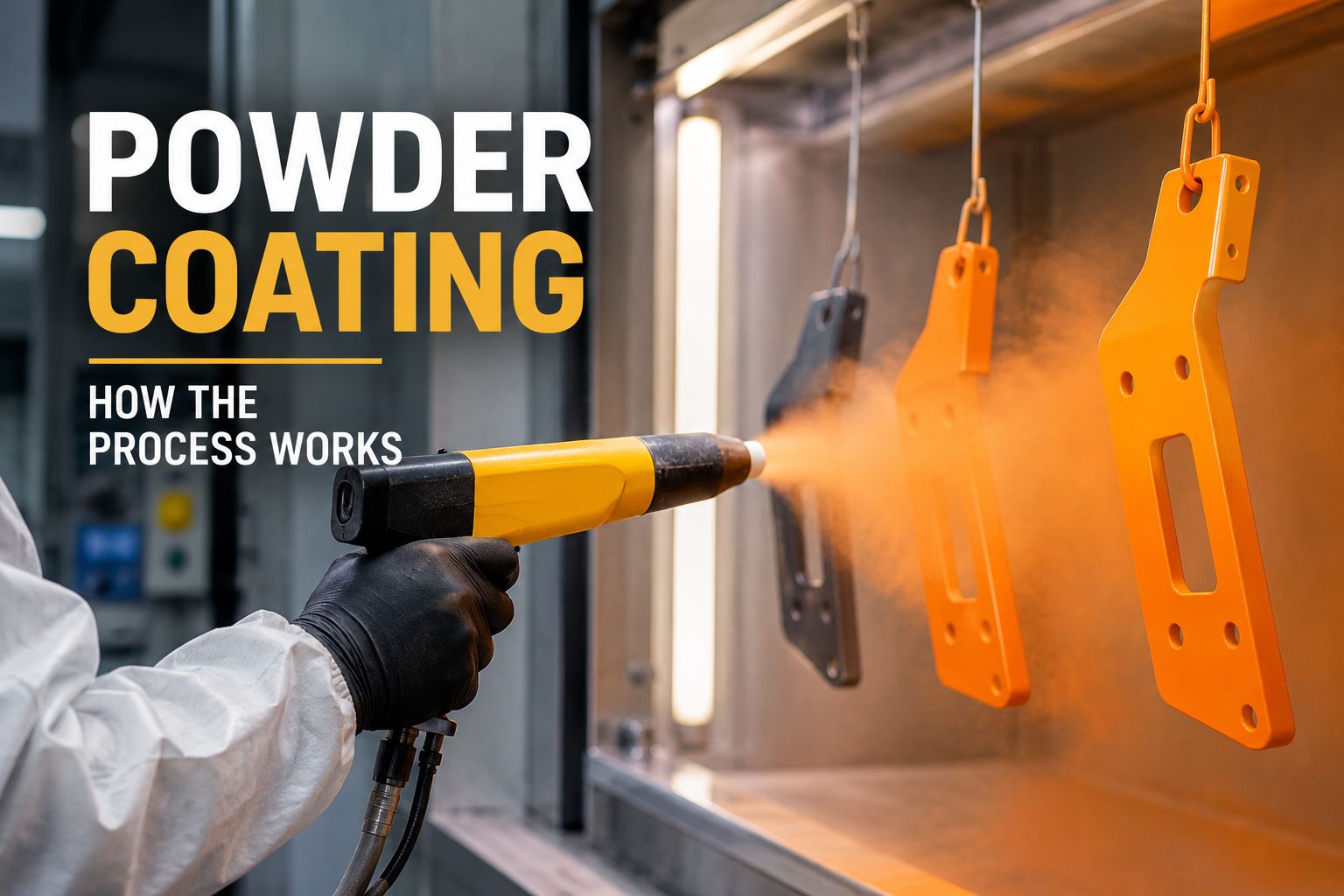
The application stage is where the process’s most distinctive feature comes into play: electrostatic charge. As powder passes through the spray gun, it picks up an electrical charge, either through a corona charge, where the powder passes near a charged electrode, or through friction charging in a tribo gun, where the powder picks up charge from contact with the gun’s internal surfaces as it passes through.
The part being coated is grounded, creating an electrical attraction between the charged powder particles and the grounded surface. This is what makes powder coating so efficient compared to spraying liquid paint: charged particles are drawn toward the grounded part, including areas that a direct line-of-sight spray pattern might otherwise miss, like recesses and complex geometry. It’s also why overspray can often be collected and reused, since it’s simply powder that missed the electrostatic pull rather than a wasted liquid that’s already partially evaporated or reacted.
Different gun types produce different application characteristics. Corona guns generally apply charge more strongly and work well on simpler geometries, while tribo guns, despite a typically lower overall charge, often perform better on complex shapes and recessed areas where corona charging can create uneven buildup. Choosing between them isn’t about one being universally better, it’s about matching the gun type to the part’s geometry.
Why Surface Preparation Determines Everything Downstream
Before any powder is applied, the part’s surface has to be properly prepared, and this stage disproportionately determines whether the finished coating will actually hold up. Oil, rust, mill scale, or residual old coating left on the surface creates a barrier between the metal and the new powder coating, and no amount of careful application or curing afterward can compensate for a poorly prepared substrate.
The mechanics of why this matters connect directly to the electrostatic application stage. A part needs a clean, conductive path to ground for the electrostatic charge to work properly, and contamination or heavy oxidation can interfere with that grounding, leading to uneven charge distribution and an inconsistent coating even before the part reaches the oven. Our complete guide to surface preparation covers the specific methods, blasting, chemical cleaning, phosphate treatment, used to get a surface ready, and the mechanical reasons behind them tie directly into why the electrostatic stage works or doesn’t.
The Curing Process and Cross-Linking
Once the powder is applied, the coated part moves into a curing oven, typically reaching temperatures in the range of 350 to 400 degrees Fahrenheit, though the exact temperature and dwell time depend on the specific powder formulation being used. This is where the real chemical transformation happens.
As the part heats, the powder particles first melt and flow together into a continuous liquid film, momentarily behaving something like a liquid coating before the next stage takes over. As temperature and time continue, the resin undergoes cross-linking, a chemical reaction where polymer chains bond to each other, forming a single continuous, thermoset network rather than a collection of individual particles that simply melted together.
This cross-linking is the reason powder coating doesn’t re-melt if it’s later exposed to heat, unlike some other coating types. Once cross-linked, the chemical structure is permanently set, which is also why cure time and temperature matter so much. Undercuring, not enough heat or not enough time, leaves the cross-linking reaction incomplete, resulting in a coating that looks finished but performs significantly worse in terms of durability, chemical resistance, and adhesion than a properly cured one.
What Film Thickness Actually Controls
Film thickness, generally measured in microns or mils, is a variable that gets set during application and then locked in during cure. Too thin a film doesn’t provide adequate coverage for corrosion and wear protection. Too thick a film can introduce internal stress during the cooling and cross-linking process, which can lead to cracking or reduced impact resistance even though the coating might look fine initially.
Getting film thickness right depends on application technique and equipment calibration as much as the powder formulation itself, which is part of why experienced applicators check thickness during the process rather than assuming a single pass produces a consistent result across a complex part with varying surface angles and distances from the spray gun.
Powder Coating Process Stages at a Glance
| Stage | What’s Happening | Why It Matters |
|---|---|---|
| Surface preparation | Contaminants removed, surface profiled for adhesion | Poor prep undermines every later stage regardless of application or cure quality |
| Electrostatic application | Charged powder drawn to grounded part | Determines coverage consistency, especially on complex geometry |
| Curing | Heat melts powder, triggers cross-linking | Creates the permanent, thermoset chemical bond that gives powder coating its durability |
| Cooling | Coated part cools and hardens | Locks in the finished film; rapid or uneven cooling can affect finish quality |
How This Compares to Traditional Liquid Paint
The mechanical and chemical differences covered here explain why powder coating and liquid paint aren’t just two versions of the same idea. Liquid paint dries through solvent evaporation, and its final hardness depends heavily on that evaporation process and ambient conditions. Powder coating’s finish depends on a controlled heat-driven chemical reaction, which is inherently more consistent and repeatable across a production environment. Our comparison of powder coating versus paint goes deeper into how these mechanism differences translate into real-world durability and cost tradeoffs.
Things to Consider When Evaluating a Powder Coating Process
- Is the shop using a documented surface preparation process appropriate to the substrate, not just a generic cleaning step?
- Is film thickness checked during application, or only assumed based on general experience?
- Does the shop confirm actual part temperature reaches full cure, not just oven set-point temperature, since large or thick parts can take longer to reach the powder’s required temperature throughout?
- Is the gun type, corona or tribo, appropriate for the part’s geometry, particularly for complex shapes with recesses?
- What quality checks happen after cooling, before the part is considered finished?
For readers who want the full ordered process from start to finish, our step-by-step powder coating process guide walks through each stage in sequence as a practical checklist.
Where Powder Coating Fits Among Coating Options
Understanding the mechanics covered here also helps explain where powder coating fits relative to other coating technologies. It’s an excellent option for metal parts that can withstand oven curing temperatures, but it’s not suited to every substrate or every application. Our piece on comparing powder coating, polyurea, and other coating solutions covers how powder coating stacks up against spray-applied alternatives for substrates and applications where oven curing isn’t practical.
Frequently Asked Questions
Why doesn’t powder coating produce VOC emissions the way liquid paint does?
Because there’s no solvent involved. Powder coating uses a dry powder applied directly to the part, with no liquid carrier that needs to evaporate, which is the source of most VOC emissions in traditional liquid paint application.
What happens if a part isn’t fully cured?
Undercuring leaves the cross-linking reaction incomplete, which can leave the coating looking finished on the surface while performing significantly worse in terms of durability, adhesion, and chemical resistance than a properly cured part.
Does the type of spray gun affect the finished coating?
Yes. Corona and tribo guns charge the powder differently, which affects how evenly the powder distributes across complex geometries. Neither is universally better, the right choice depends on the part’s shape and the application setup.
Can powder coating be applied to any metal?
Most common metals can be powder coated, but the part needs to withstand the curing oven’s temperature without warping or other heat damage, which rules out some substrates and requires careful consideration for thin or heat-sensitive parts.
How does film thickness get controlled during application?
Through applicator technique, equipment calibration, and periodic thickness checks during the process, since thickness is set during application and then permanently locked in once the part cures.
Conclusion
Powder coating’s finished result, a hard, even, durable coating, is the product of two distinct physical mechanisms working together: an electrostatic charge that pulls powder onto a grounded part with unusual efficiency, and a heat-driven chemical reaction that permanently cross-links the coating into a thermoset film. Understanding what’s actually happening at each of these stages, rather than treating the process as a black box between application and a finished part, makes it much easier to spot the difference between a shop that’s genuinely controlling each variable and one that’s just following steps without understanding why they matter.
Teresa Wallace
Written by the team at Gorilla Powder Coating — 13+ years of automotive, industrial and custom finishing work. Questions about your own project? Get in touch.
Ready to get it coated?
Send us the part, the color and the timeline. You will get honest pricing and a realistic turnaround before anything goes in the booth.